
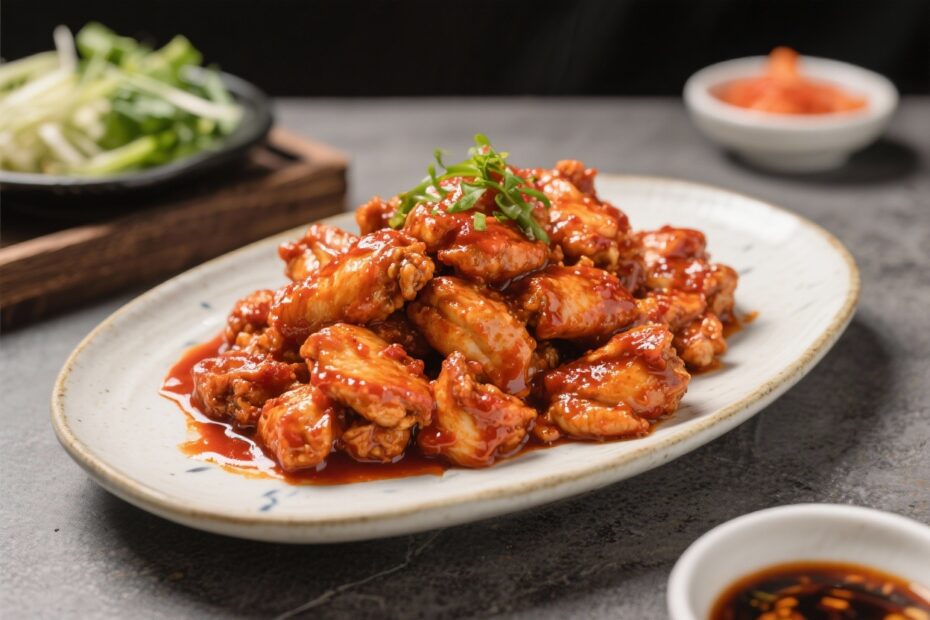
Korean Spicy Gochujang Chicken is the kind of dish that hits every note: sweet, spicy, savory, and a little smoky. The sauce clings to tender chicken, and each bite is big on flavor without feeling heavy. It’s weeknight-friendly, but still impressive enough to serve guests.
You can make it on the stove, bake it, or even grill it. Pair it with rice and crisp vegetables, and you’ve got a complete meal with very little fuss.
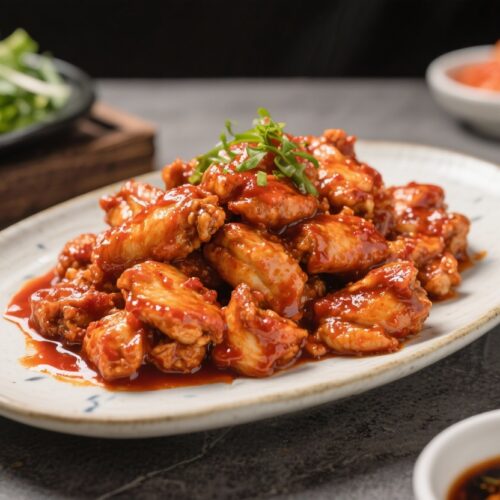
Korean Spicy Gochujang Chicken - Sticky, Savory Heat You’ll Crave
Ingredients
- 1.5 pounds boneless, skinless chicken thighs (or breasts), cut into bite-size pieces
- 2 tablespoons neutral oil (canola, avocado, or vegetable)
- 2-3 cloves garlic, minced
- 1 teaspoon fresh ginger, grated (optional but recommended)
- 3 tablespoons gochujang (Korean red chili paste)
- 1 tablespoon gochugaru (Korean chili flakes), optional for extra heat
- 2 tablespoons soy sauce (use low-sodium if preferred)
- 1-2 tablespoons honey or brown sugar (adjust to taste)
- 1 tablespoon rice vinegar or apple cider vinegar
- 1 tablespoon sesame oil
- 2-3 tablespoons water (to loosen the sauce as needed)
- 1 teaspoon cornstarch (optional, for thicker glaze)
- 2 green onions, thinly sliced (for garnish)
- 1 tablespoon toasted sesame seeds (for garnish)
- Cooked white rice or steamed short-grain rice, for serving
- Cucumber slices or steamed broccoli, for serving (optional)
Instructions
- Prep the chicken. Pat the chicken dry and cut it into even, bite-size pieces. Dry chicken browns better and helps the sauce cling.
- Make the sauce. In a bowl, whisk together gochujang, soy sauce, honey, rice vinegar, sesame oil, and water. Add minced garlic, ginger, and gochugaru if using. Taste and adjust sweetness or heat.
- Optional marinade. For deeper flavor, toss the chicken with half the sauce and let it sit for 15–30 minutes. Keep the rest of the sauce for cooking and glazing.
- Heat the pan. Set a large skillet over medium-high heat and add the neutral oil. When it shimmers, add the chicken in a single layer.
- Sear until lightly browned. Cook the chicken for 3–4 minutes without moving too much, then stir and cook another 3–4 minutes until mostly cooked through.
- Add the sauce. Pour in the remaining sauce. Lower heat to medium and let it bubble, stirring often. If you want it extra glossy, mix cornstarch with 1 tablespoon water and stir in.
- Reduce to a glaze. Let the sauce thicken until it coats the chicken and turns sticky, about 2–4 minutes. If it gets too thick, add a splash of water.
- Finish and garnish. Turn off the heat. Sprinkle with green onions and sesame seeds.
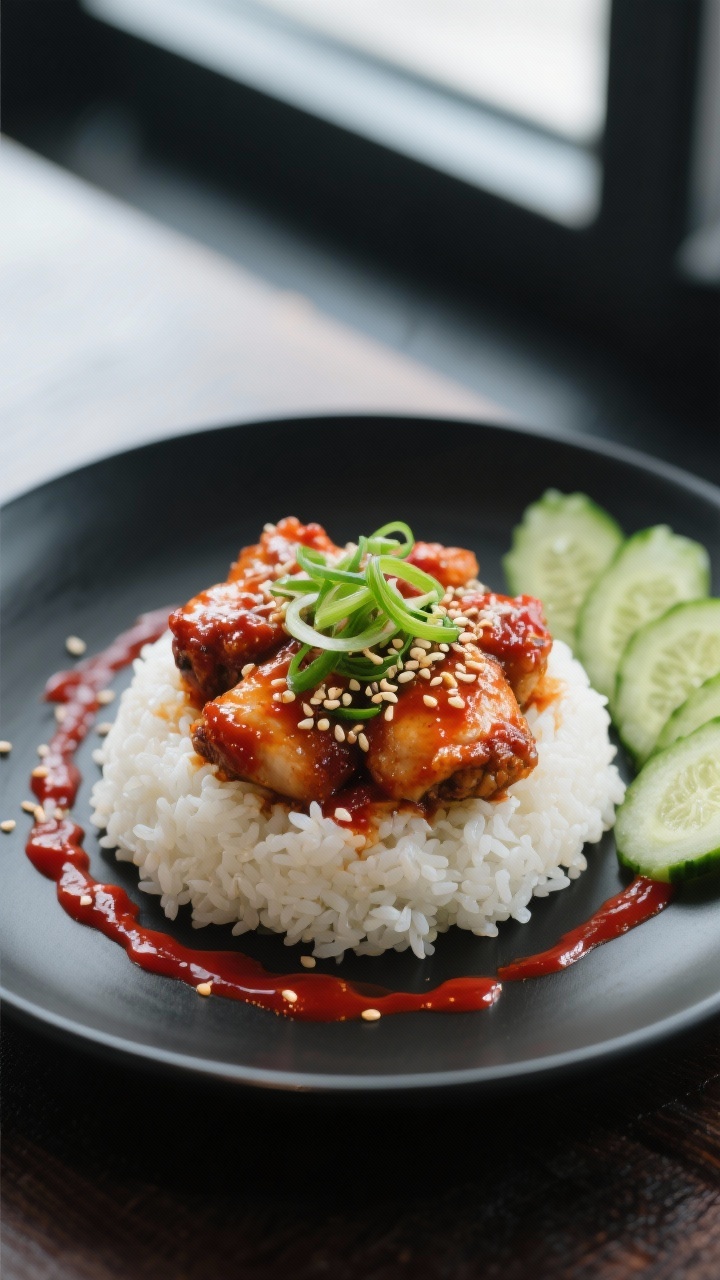
- Serve. Spoon over hot rice and add crisp veggies on the side. The cool, fresh crunch balances the heat.
What Makes This Special

This dish centers around gochujang, a Korean fermented chili paste that brings complex heat, not just fire. It’s balanced with honey or sugar for sweetness, soy sauce for depth, and a touch of rice vinegar for brightness.
The sauce caramelizes beautifully, giving you that sticky finish everyone loves. It’s versatile, too—use thighs for juiciness or breasts for a leaner option. Best of all, the marinade doubles as a glaze, so you get big flavor with fewer steps.
Ingredients
- 1.5 pounds boneless, skinless chicken thighs (or breasts), cut into bite-size pieces
- 2 tablespoons neutral oil (canola, avocado, or vegetable)
- 2-3 cloves garlic, minced
- 1 teaspoon fresh ginger, grated (optional but recommended)
- 3 tablespoons gochujang (Korean red chili paste)
- 1 tablespoon gochugaru (Korean chili flakes), optional for extra heat
- 2 tablespoons soy sauce (use low-sodium if preferred)
- 1-2 tablespoons honey or brown sugar (adjust to taste)
- 1 tablespoon rice vinegar or apple cider vinegar
- 1 tablespoon sesame oil
- 2-3 tablespoons water (to loosen the sauce as needed)
- 1 teaspoon cornstarch (optional, for thicker glaze)
- 2 green onions, thinly sliced (for garnish)
- 1 tablespoon toasted sesame seeds (for garnish)
- Cooked white rice or steamed short-grain rice, for serving
- Cucumber slices or steamed broccoli, for serving (optional)
How to Make It
- Prep the chicken. Pat the chicken dry and cut it into even, bite-size pieces.
Dry chicken browns better and helps the sauce cling.
- Make the sauce. In a bowl, whisk together gochujang, soy sauce, honey, rice vinegar, sesame oil, and water. Add minced garlic, ginger, and gochugaru if using. Taste and adjust sweetness or heat.
- Optional marinade. For deeper flavor, toss the chicken with half the sauce and let it sit for 15–30 minutes.
Keep the rest of the sauce for cooking and glazing.
- Heat the pan. Set a large skillet over medium-high heat and add the neutral oil. When it shimmers, add the chicken in a single layer.
- Sear until lightly browned. Cook the chicken for 3–4 minutes without moving too much, then stir and cook another 3–4 minutes until mostly cooked through.
- Add the sauce. Pour in the remaining sauce. Lower heat to medium and let it bubble, stirring often.
If you want it extra glossy, mix cornstarch with 1 tablespoon water and stir in.
- Reduce to a glaze. Let the sauce thicken until it coats the chicken and turns sticky, about 2–4 minutes. If it gets too thick, add a splash of water.
- Finish and garnish. Turn off the heat. Sprinkle with green onions and sesame seeds.
- Serve. Spoon over hot rice and add crisp veggies on the side.
The cool, fresh crunch balances the heat.
Storage Instructions
- Refrigerate: Store leftovers in an airtight container for up to 4 days.
- Reheat: Warm gently in a skillet over medium heat with a splash of water to loosen the sauce, or microwave in short bursts.
- Freeze: You can freeze cooked chicken for up to 2 months. Thaw in the fridge overnight, then reheat as above.
- Meal prep tip: Keep rice and chicken in separate containers to prevent sogginess.

Why This is Good for You
Chicken provides lean protein to keep you full and support muscle health. Gochujang is made from fermented ingredients, which can add beneficial compounds and a rich umami taste without relying on heavy fats.
Garlic and ginger bring antioxidants and a boost of flavor, so you don’t need as much sugar or oil. With steamed vegetables on the side, you’re getting fiber, color, and balance on the plate.
Pitfalls to Watch Out For
- Burning the sauce: Gochujang and honey can scorch on high heat. Reduce the heat when you add the sauce and keep it moving.
- Overcrowded pan: Too much chicken at once steams instead of browning.
Cook in batches if needed.
- Too salty:</-strong> Using regular soy sauce plus salty gochujang can be intense. Choose low-sodium soy sauce or add a splash of water to balance.
- Uneven pieces: Different sizes cook at different rates. Keep pieces as uniform as possible.
- Too thick or too thin: If the sauce tightens up quickly, add water.
If it’s runny, simmer another minute or use a cornstarch slurry.
Variations You Can Try
- Oven-baked: Toss chicken with sauce and spread on a lined sheet pan. Bake at 425°F (220°C) for 15–20 minutes, flipping once. Broil for 1–2 minutes for char.
- Grilled: Marinate and thread onto skewers.
Grill over medium-high heat, brushing with extra sauce toward the end.
- Veggie-forward: Add bell peppers, onions, or zucchini in the pan. Stir-fry until crisp-tender before glazing.
- Crispy version: Lightly coat chicken in cornstarch and pan-fry until crisp. Toss with warmed sauce right before serving.
- Dairy-free creamy twist: Stir in a spoonful of coconut milk at the end for a milder, silky sauce.
- Extra smoky: Add a pinch of smoked paprika or use a charcoal-grilled finish.
- Lower sugar: Swap honey for a smaller amount of maple syrup or a sugar substitute that can handle heat.
FAQ
What is gochujang, and where can I find it?
Gochujang is a Korean fermented chili paste made from red pepper, glutinous rice, soybeans, and salt.
It’s thick, slightly sweet, and deeply savory. Look for it in Asian grocery stores, the international aisle of larger supermarkets, or online.
How spicy is this dish?
It’s moderately spicy, with a slow-building heat. If you’re sensitive, start with 2 tablespoons of gochujang and skip the gochugaru.
You can always add more heat at the end.
Can I use chicken breasts instead of thighs?
Yes. Breasts cook faster and can dry out if overcooked, so watch the timing and avoid high heat for too long. Thighs are more forgiving and stay juicier, but both work well.
What can I substitute for rice vinegar?
Apple cider vinegar or white wine vinegar works.
Add a pinch of sugar if the vinegar is sharper, and adjust to taste.
How do I make it gluten-free?
Use tamari or a certified gluten-free soy sauce, and check that your gochujang is gluten-free. Some brands may contain wheat or barley.
Can I make it ahead?
Yes. You can marinate the chicken up to 24 hours in advance, or cook fully and reheat later.
The flavors often deepen by the next day.
What should I serve with it?
Steamed short-grain rice is classic. Add cucumber slices, pickled radish, or a simple sesame-dressed salad for freshness. Kimchi on the side is excellent if you like tangy heat.
Why did my sauce separate?
If the heat is too high or there’s not enough liquid, the sauce can tighten and split.
Lower the heat and whisk in a splash of water to bring it back together.
Can I use an air fryer?
Yes. Toss chicken with half the sauce and air-fry at 380°F (193°C) for 10–14 minutes, shaking halfway. Warm the remaining sauce in a pan and toss the cooked chicken in it.
Is gochujang the same as sriracha?
No.
Gochujang is a thick paste with fermented depth and less vinegar. Sriracha is a thinner chili sauce with a tangier, garlicky profile. They’re not direct substitutes, but sriracha can add heat if you’re in a pinch.
In Conclusion
Korean Spicy Gochujang Chicken brings bold flavor with simple steps and everyday ingredients.
The sauce is punchy yet balanced, and it’s easy to tweak for heat, sweetness, or texture. Serve it with rice and crisp vegetables for a satisfying, vibrant meal. Once you make it, you’ll keep a tub of gochujang in your fridge for the next round—and the one after that.
Discover More Delicious Ideas 🍽️
If you need dinner inspiration for busy evenings, explore our
Dinner Recipes category.
If you’re craving delicious chicken meals, browse our
Chicken Recipes category.
If you need dinner on the table fast, explore our
Quick & Easy category.
If you’re craving new flavors, take a look at our
World Cuisine category.
If you want something lighter but still satisfying, visit our
Healthy & Light category.
If you’re in the mood for a treat, find something sweet in our
Sweets & Desserts category.
If you like to plan ahead, get inspired in our
Meal Prep & Planning category.
If you’re keeping it low carb and still want satisfying meals, explore our
Keto Weight Loss category.
If you’re looking for detox drinks, smoothies, or kid-friendly blends, browse our
Juices & Smoothies category.
If you want to see the kitchen tools and gadgets I personally use for cooking and meal prep, visit my
My Kitchen Essentials page.
Or explore everything in one place in
All Recipes.
Printable Recipe Card
Want just the essential recipe details without scrolling through the article? Get our printable recipe card with just the ingredients and instructions.