Warm the stock: Add your stock to a saucepan and keep it at a low simmer.
Warm stock helps the rice cook evenly and prevents the pot from cooling each time you add liquid.
Sweat the onion: In a wide, heavy pot, heat the olive oil and 2 tablespoons butter over medium heat. Add the onion with a pinch of salt. Cook gently for 4–5 minutes until translucent but not browned.
Toast the rice: Stir in the rice and coat it with the fat.
Cook 1–2 minutes until the edges look slightly translucent and you smell a nutty aroma. This step builds flavor and keeps the grains distinct.
Deglaze with wine: Pour in the white wine and stir until it mostly evaporates. The wine adds acidity, which balances the richness of the cheese and butter.
Add stock gradually: Ladle in enough warm stock to just cover the rice.
Stir gently and steadily, keeping the rice moving so it releases starch without breaking. When the liquid is mostly absorbed, add another ladle. Continue for 16–20 minutes.
Season as you go: Taste a spoonful around the 12-minute mark.
Add a little salt if needed, but hold back until you add the cheese—Parmesan is salty.
Check doneness: The rice is ready when the grains are tender with a slight bite in the center. The texture should be creamy and loose, not stiff. Add more stock if it thickens too much.
Finish the risotto (mantecatura): Remove from heat.
Stir in the remaining 1 tablespoon butter and 3/4 cup grated Parmesan until glossy. Adjust seasoning with salt and pepper. If you like it looser, stir in a splash more warm stock.
Optional brightness: Add a whisper of lemon zest or a squeeze of lemon to wake up the flavors.
Garnish with chopped parsley or chives.
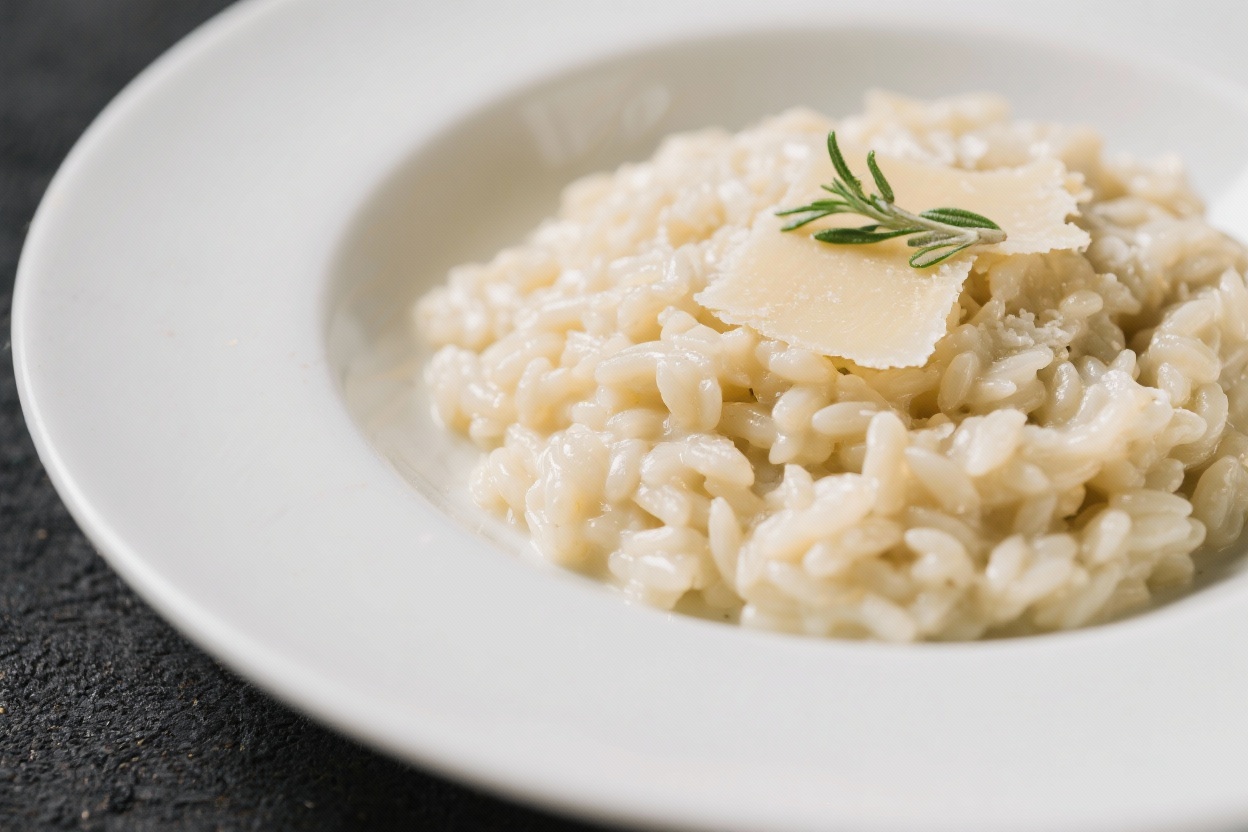
Serve immediately: Risotto waits for no one. Spoon into warm bowls and finish with extra Parmesan on top.